
Meet the Brand
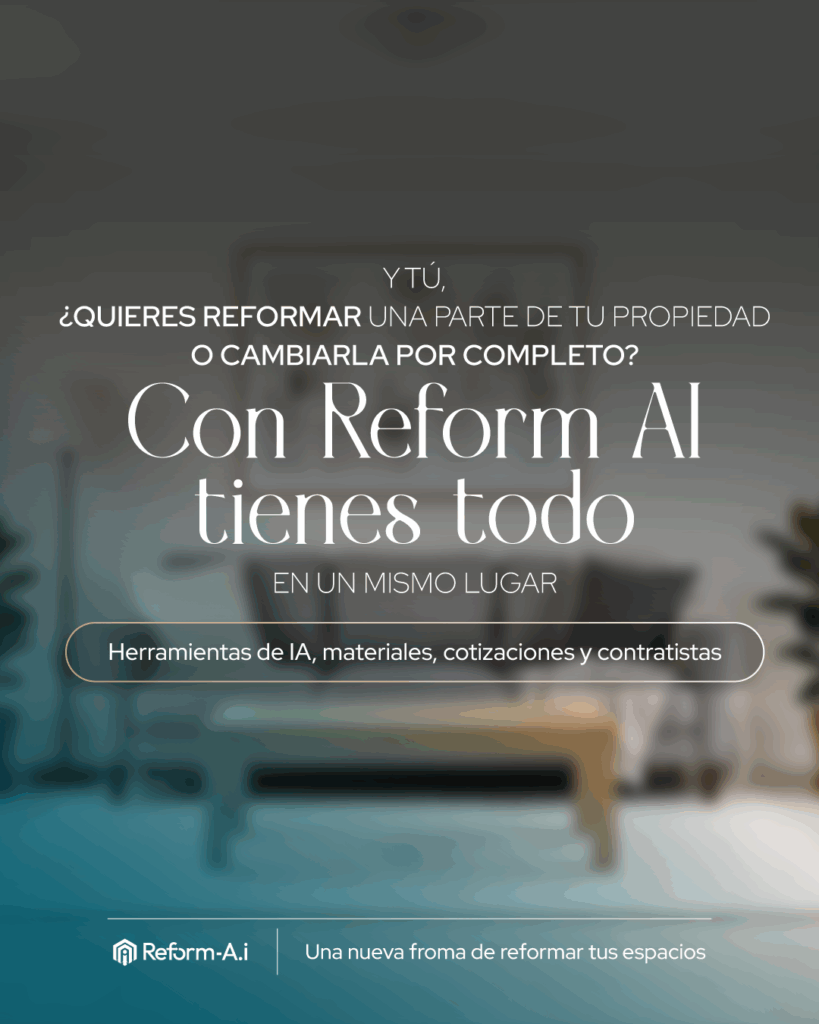
Reform AI is a PropTech platform that uses artificial intelligence to transform how people renovate and buy properties. It brings design, visualization, materials purchasing, hiring, and project execution together in one place.
Why Reform AI Needed a Growth System
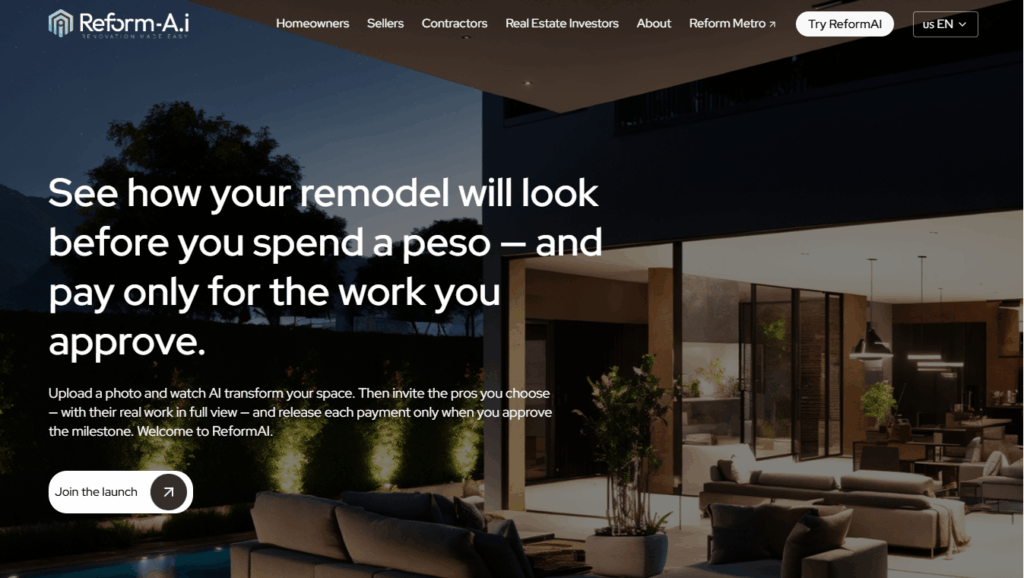
Reform AI had a clear ambition. It wanted to reach 10,000 users and more than 500 transactions while building an internationally positioned brand. But its marketing was at an early stage. The website was still under development, social channels had limited activity, there was no history of digital acquisition, and data was still being set up. The company also needed to validate its market in the short term to support its fundraising process.
Our challenge was to design the growth architecture that would make scaling possible, one that could attract, educate, activate, and measure demand from day one.
The Real Problem
Renovating a property means making many decisions without losing time, money, or confidence, especially when finding professionals and buying materials. We identified five friction points.
- Cost overruns and delays
- Unreliable providers
- Lack of transparency
- Fear of making the wrong decision
- Lack of guidance
Reform AI also had a challenge of its own. Introducing AI into a decision that already creates uncertainty could widen the distance between the user and the brand, unless the technology was explained in a clear and human way.

What Was Holding Growth Back
Reform AI connects design, purchasing, hiring, and execution on a single platform, steps that are usually handled separately. That created a communication challenge.
Some competitors focused on connecting users with professionals. Others specialized in budgets, materials, design, or execution. Reform AI had to show why bringing the whole process together is better for the user.
The real bottleneck was turning a broad offer into one clear reason to choose the platform.
Our Strategic Hypothesis
If Reform AI speaks to the real needs of each audience and shows how it removes uncertainty from the process, then trust and intent to convert will grow.
| 1. One story everywhere If every touchpoint tells the same story about why an integrated process beats a fragmented one, hesitation during the decision will drop. | 2. One message per audience If each piece of content speaks to the problem of a specific audience and runs in the channel where that audience pays attention, lead quality will improve, and acquisition costs will fall. | 3. Proof from real experience If clients and professionals share their results, that social proof will build trust and bring in new users. |
One System for Three Audiences
We built the system around three audiences, each with its own message and entry point.
- Buyers (B2C): People who want to see what a space could become before committing money.
- Investors and sellers (B2B): People who need to see the potential of a property and connect with professionals.
- Contractors and professionals (B2B): Partners who need a credible reason to join the platform.
Instead of running separate B2C and B2B strategies, we designed them to strengthen each other. B2C experiences build trust with B2B audiences, and B2B partners add credibility to the B2C experience.
What We Did
We built the system in three phases, moving from a solid digital base to measurable demand.
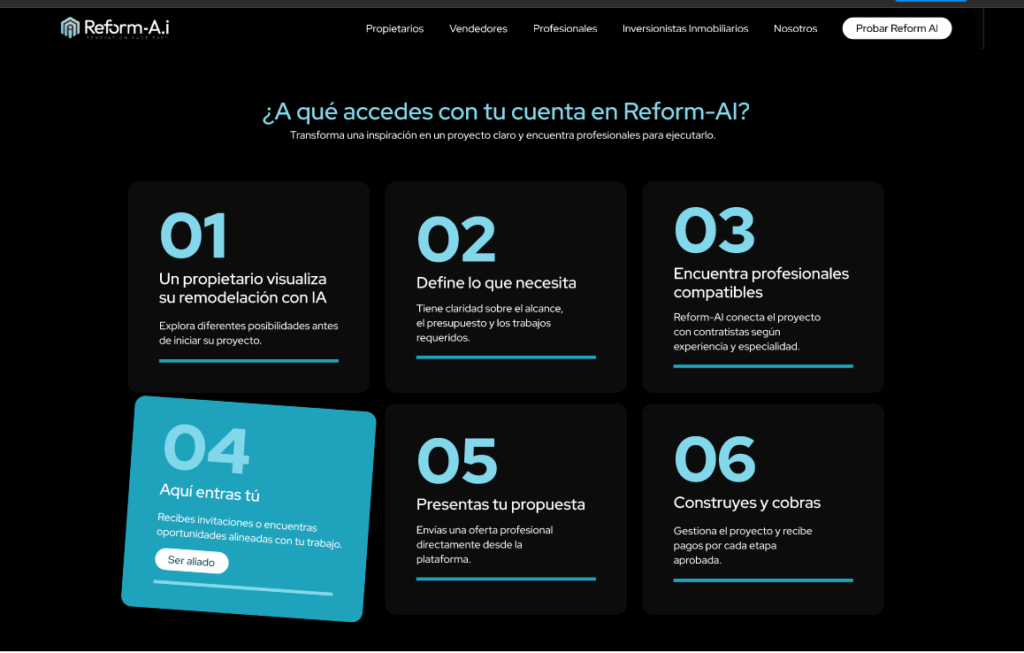
Phase 1. Digital Foundation and Story (Web UX/UI)
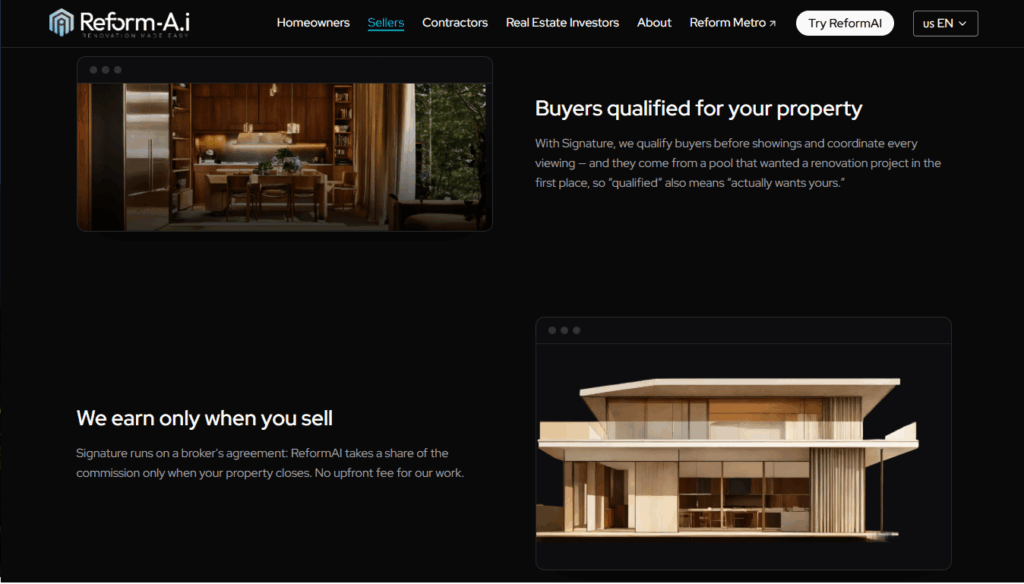
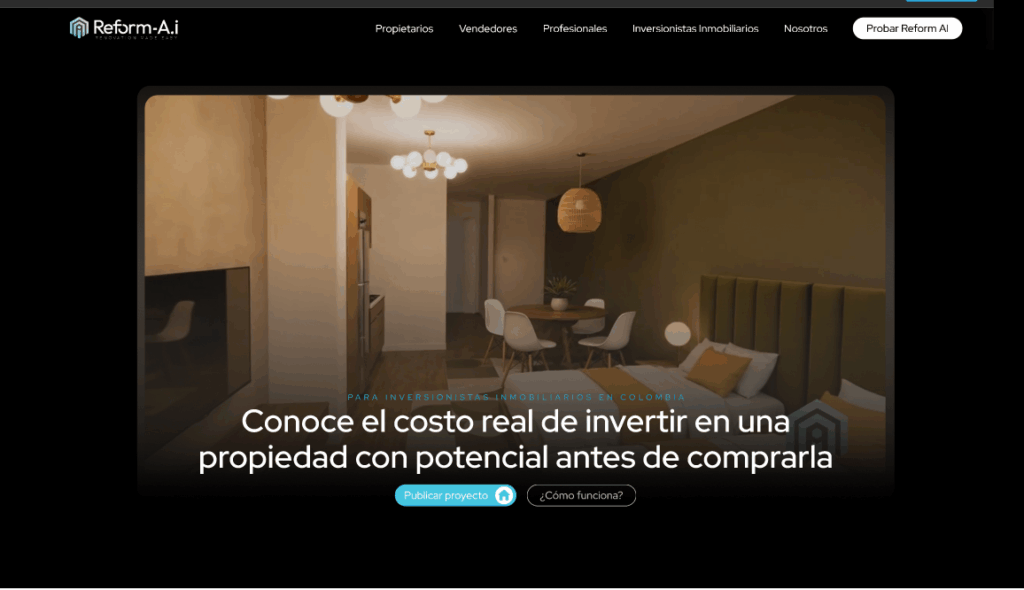
We redesigned three landing pages, one each for contractors, investors, and buyers. We kept the existing structure and improved the copy and design.
- We rewrote the copy to remove ambiguity.
- We replaced AI-generated images with more realistic photography.
- We added before-and-after videos and interactive sections.
- We introduced a new type hierarchy without breaking the visual identity.
Phase 2. Social Media and Expert Voice
Social Media:
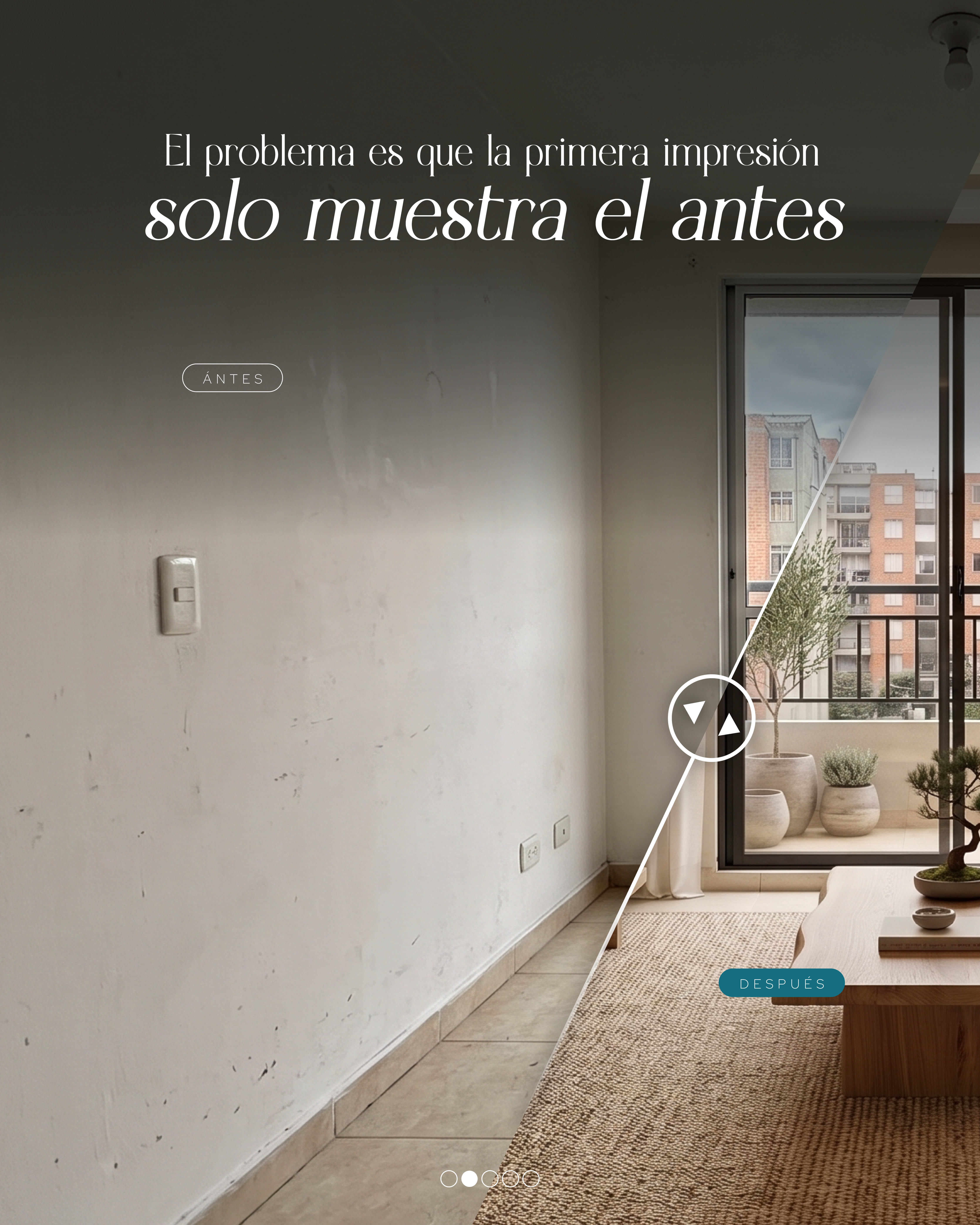
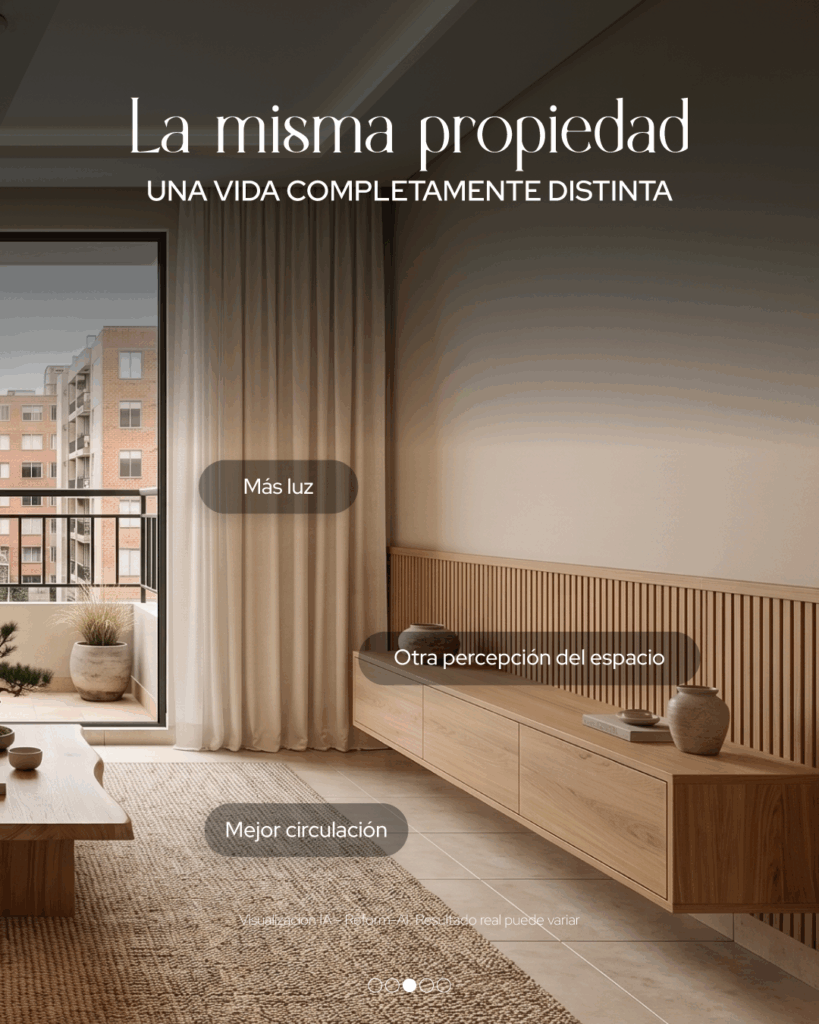
We built a content calendar for Instagram, Facebook, and TikTok, with each piece doing one of three jobs.
- Spark curiosity with transformations of real spaces.
- Start conversations with interactive pieces, like voting on a style, a floor, or a dream kitchen.
- Explain the full ecosystem without sounding corporate.
Every piece carries a transparency note about AI-generated visuals. Two reels speak directly to sellers and developers, and one story invites professionals to join the platform.
Expert voice:
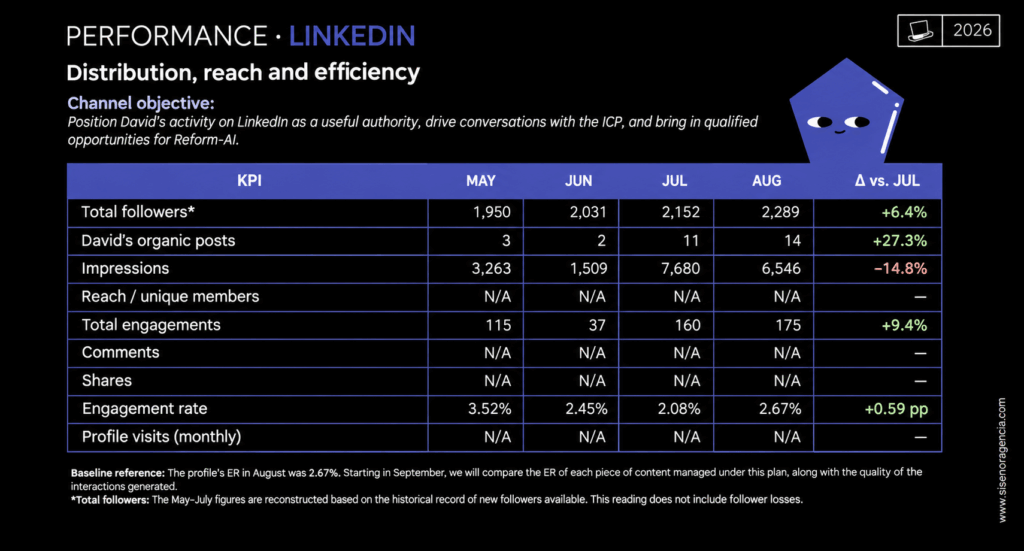
We positioned Reform AI as a trusted source on renovation and on how AI can help at home, with the founder’s LinkedIn profile as the main channel. There, the founder shares what the brand knows firsthand, from how renovation decisions get made to where projects go wrong and how AI can make the process clearer.
This puts a human face on the technology. People trust a person they can see and follow more than a logo, and that trust extends to the investors, contractors, and partners who are also on the platform.
Phase 3. Paid Media, Automation, and Data
Paid media:
We set up ad accounts on Meta Ads, Google Ads, and TikTok Ads, with shared team access and a media plan. We then built the ad calendar around the user journey:
- Prospecting: The goal is to interrupt, spark curiosity, and make people reconsider a property they would have written off.
- Remarketing: Here we can be more direct. People already know the promise and are ready to visualize, sign up, or explore a property.
Automation:
We designed flows to guide users after their first contact, built around one core metric: projects activated with real intent. That means B2C or B2B users who take a high-value action in the ecosystem, such as generating a visualization, saving a project, requesting a quote, completing a validated B2B registration, or contacting a partner.
Dashboards:
We built dashboards that bring together social media, paid media, and website performance, so the team can see which channels and messages lead to real intent, not just clicks or views.


Key Creative Decisions
Each decision started from a friction point, assigned a channel to solve it, and defined the action we expected from the user.
- Show the transformation before explaining the technology: AI feels abstract and distant, so we used before-and-after videos on social and the landing pages. We expected users to try a visualization.
- Make the audience participate: Renovation can feel like a decision users face alone, so we created interactive social pieces where people vote on a style, a floor, or a kitchen. We expected them to comment, then try the platform.
- Put a person behind the technology: Distrust of AI grows when decisions are high-stakes, so the founder’s LinkedIn profile became the human face of the brand. We expected people to follow, then join as an investor, contractor, or partner.
- Write each message for one audience: A broad offer speaks to no one in particular, so we created three dedicated landing pages and separate reel scripts. The expected action changed by audience, from requesting a quote to registering as a professional or contacting a partner.
- Be transparent about AI: AI-generated visuals can feel less credible, so every piece carries a transparency note. We expect users to trust the platform enough to explore it.
Changes along the way
- Images: We moved from AI-generated visuals to more realistic photos and videos, because too much artificiality made the offer feel less tangible.
- B2B messages: We reworked the seller reel scripts. Lines about “speeding up closings” became messages about what a property can become and how to connect with professionals.
- Tone: We reframed the reel about renovation expectations to come from a place of shared experience, without turning men into caricatures.
What’s Ready for Activation
Reform AI moved from an unfinished website and a quiet social presence to a complete system ready to launch.
- A consistent story that explains, in clear and human language, why bringing design, purchasing, hiring, and execution together is better for the user.
- A warm and transparent voice that brings AI closer to a decision that creates uncertainty.
- Three redesigned landing pages with messages, images, and before-and-after videos tailored to each audience.
- An active presence on Instagram, Facebook, and TikTok.
- Ad accounts structured on Meta, Google, and TikTok, with a strategy built stage by stage, ready to launch once the site goes live.
- Automation flows to support users after their first contact.
- Dashboards that consolidate social, paid, and web performance.
Measurement Setup
Measuring requires publishing first, so analytics, access, and payments were aligned before launching paid media. From launch, the system is designed to track the following.
- Projects activated with real intent (our core metric)
- Quote requests
- Validated B2B registrations
- Web traffic, including traffic coming from social media
- Social interaction (engagement rate, reach, comments)
- Conversion by audience
- Performance by channel
| Targets defined for the system | |
| Indicator | Target |
| B2C leads | 22,000 |
| B2B users | 133 |
| Conversion to quote requests | 10% |
| Organic reach | +300% |
| Engagement rate | ≥4.5% |
| Web traffic from social media | +40% |
| These are targets set for measurement, not results achieved. | |
Lessons We Can Apply to Other Cases
- Show before you explain: Visual transformation sums up the offer in seconds and avoids talking about technology in the abstract.
- Turn users into participants: Pieces where the audience picks a style, a floor, or a kitchen give people a natural reason to comment and try the platform.
- Realism is a trust decision: Heavily AI-generated images hurt credibility, so we treated realism as part of the strategy, not a style choice.
- A message built for one audience doesn’t work for another: The B2B scripts needed their own approach.
- Publish first, then measure: Get the site live with analytics in place before launching paid media, and align access, payments, and analytics from day one so hypotheses can be tested right away.
- When the offer is broad, give each channel one clear job: And define a core metric based on real intent, not visibility, to keep every decision focused.